
Fire Risk Assessments for Flats: The Truth About Fire Doors Explained in Under 3 Minutes

At Pensar Property Management, we believe that safety shouldn't be a mystery. For leaseholders, residents, and freeholders alike, navigating the sea of health and safety regulations can feel overwhelming. Among the most critical components of any safety strategy is the fire risk assessment for a block of flats.
In this guide, we are stripping away the jargon. We want to provide you with a clear, concise "3-minute" understanding of why fire doors are the unsung heroes of your building and how they fit into the broader scope of professional residential block management.
Understanding the Fire Risk Assessment for a Block of Flats
A Fire Risk Assessment (FRA) is more than just a piece of paper; it is a live document that serves as the blueprint for resident safety. Under the Regulatory Reform (Fire Safety) Order 2005, every residential block must have a valid FRA. This assessment identifies potential hazards and outlines the necessary steps to minimize risks.
When a professional block management company like Pensar Property Management oversees your building, we ensure these assessments are not only completed but acted upon. We look at everything from ignition sources to the speed at which a fire might spread. However, the one element that consistently takes centre stage in these reports is the fire door.

Why Fire Doors are Your Building's First Line of Defence
Imagine a fire starts in a single kitchen. Without a proper barrier, smoke and flames can travel through a hallway and up a stairwell in seconds, cutting off escape routes for every other resident. This is where the fire door earns its keep.
The primary purpose of a fire door is "compartmentation." By containing a fire within its room of origin for a set period: usually 30 minutes: the door provides vital time for residents to evacuate and for the fire service to arrive. In many modern blocks, the strategy is "Stay Put," which relies entirely on the integrity of these doors. If the doors fail, the entire safety strategy of the building collapses.
The 3-Minute Fire Door Checklist: What You Need to Know
You don’t need to be a surveyor to spot the basics of a compliant fire door. Here is the "truth" about fire doors explained simply:
The Rating (FD30S): Most flat entrance doors must be FD30S rated. This means they provide 30 minutes of fire resistance and are fitted with smoke seals (the 'S').
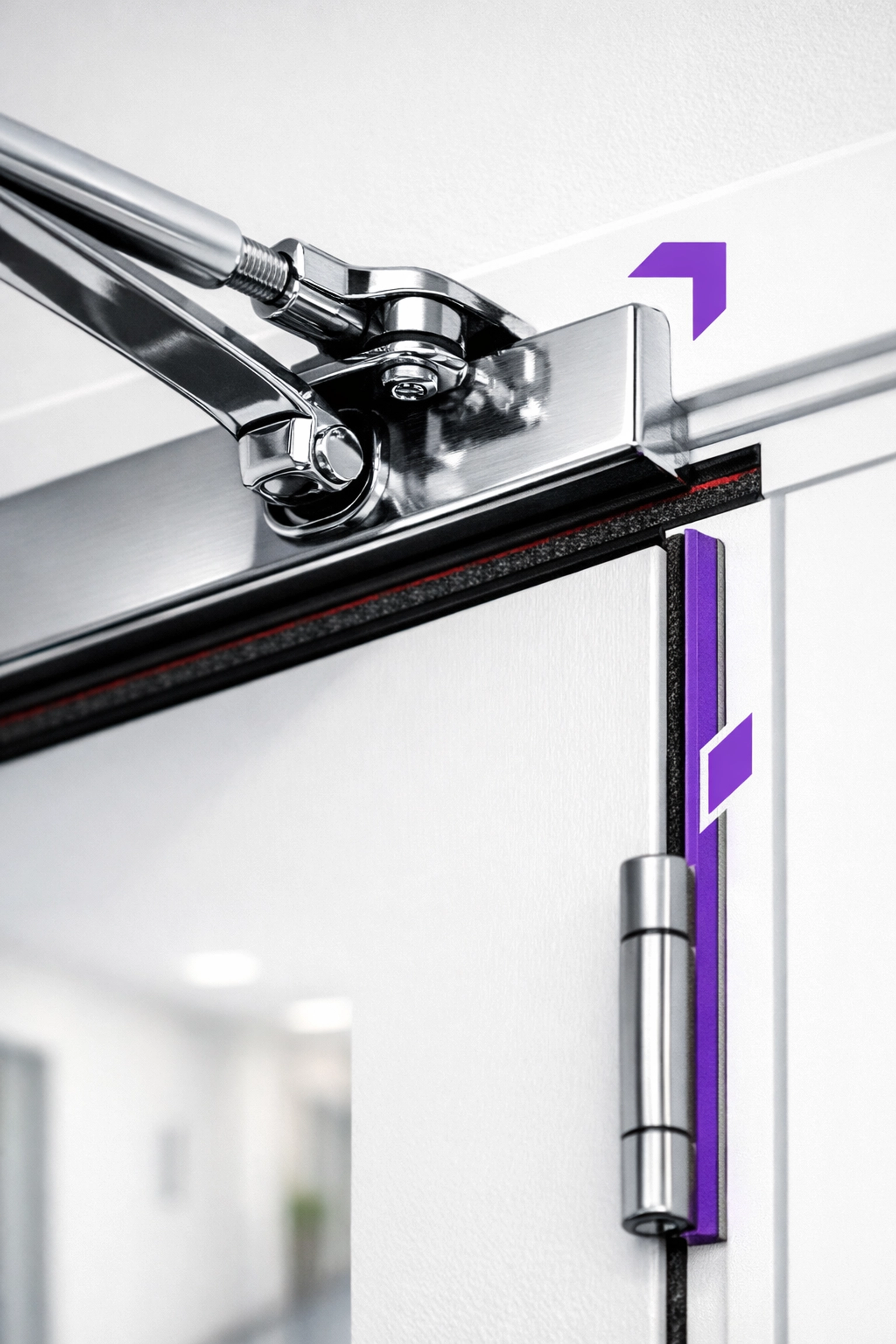
The Self-Closer: This is the most common point of failure. A fire door is only a fire door if it is closed. A compliant door must have a working self-closing mechanism that pulls the door firmly into the frame from any angle.
Intumescent Strips: Look for the thin strips around the edge of the door or the frame. In a fire, these expand to seal the gap between the door and the frame, stopping the spread of heat and smoke.
No uPVC or Standard Wood: Unless specifically tested and certified, standard uPVC or solid wood doors rarely meet the 30-minute requirement.
Certified Hardware: Every hinge, handle, and lock must be fire-rated. If you replace a handle with a cheap high-street version, you might have just compromised the entire door's integrity.
Common Pitfalls: Cat Flaps, Letterboxes, and the "Wedged Open" Trap
One of the biggest challenges in health and safety inspections is the "human element." Residents often want to personalize their homes, but certain changes can be dangerous.
For instance, installing a cat flap in a fire door instantly voids its certification. The hole created allows fire and smoke to bypass the door entirely. Similarly, letterboxes must be fire-rated and fitted with intumescent liners.
We also frequently see communal fire doors wedged open with fire extinguishers or heavy blocks. While we understand the desire for fresh air or ease of movement, a wedged-open fire door is nothing more than a wooden plank. It offers zero protection in an emergency. Part of our mission at Pensar is to foster a culture of safety where residents understand that these small rules contribute to a significantly safer environment for everyone.
What a Good Fire Risk Assessment Actually Covers (Beyond the Paperwork)
A thorough FRA is not a tick-box exercise. It is a practical, building-specific plan that should translate into clear actions for the responsible person, managing agent, and residents.
For instance, a solid assessment will typically cover:
Fire doors and compartmentation: Are flat entrance doors and communal doors the correct rating, self-closing, and in good repair?
Means of escape: Are corridors and stairwells clear, well-lit, and signed appropriately?
Fire detection and alarm provisions (where applicable): Are systems tested and maintained on schedule, and are records available?
Emergency lighting and signage: Do residents have safe visibility during a power failure?
Fire-fighting equipment (if provided): Are extinguishers, dry risers, or other equipment inspected and accessible?
Management controls and resident communication: Are there clear notices, evacuation guidance, and a process for reporting defects?
A useful rule of thumb: if your FRA identifies issues but nothing changes on site, it is not doing its job. The real value is in the follow-through.
How a Professional Block Management Company Protects Your Investment
Safety is a moral imperative, but it is also a financial one. A building with a poor fire safety record or an outdated fire risk assessment for a block of flats is a significant liability.
For investors, a non-compliant building is difficult to insure and even harder to sell. Lenders are increasingly cautious about fire safety, often requiring extensive documentation before approving a mortgage on a flat. By proactively managing fire doors and health and safety schedules, we protect the capital value of the property. For example, a well-managed block often sees a 10-15% higher retention in property value compared to those with outstanding safety issues.
For residents, professional management means peace of mind. You shouldn't have to worry about whether the communal smoke vents work or if the dry riser has been tested. That’s our job. We take the administrative burden off your shoulders, handling the contractors, the inspections, and the legal filings.

The Pensar Approach: Proactive, Not Reactive
The difference between a standard manager and a partner like Pensar Property Management lies in our proactive nature. We don't wait for a "Notice of Deficiencies" from the Fire Brigade to take action.
Our team conducts regular site visits to check that self-closers are still working and that intumescent strips haven't been painted over (a common mistake that stops them from working!). We believe in transparent communication. If a repair is needed, we explain why, how much it will cost, and how it benefits the long-term health of the building.
Are you unsure about the fire safety status of your block? Whether you are a leaseholder in a small conversion or part of a large RTM company in a purpose-built block, we are here to help. You can explore our FAQs or reach out to us directly for a consultancy session.
A Bright and Safe Future for Essex Residents
The landscape of residential property is changing. With the introduction of the Building Safety Act and tightening fire regulations, the "old way" of managing blocks: doing the bare minimum: is no longer enough.
At Pensar Property Management, we are embracing this new standard. Our goal remains the same: to create vibrant, safe, and well-maintained communities.
Fire doors might seem like a small detail in the grand scheme of property ownership, but they represent our commitment to excellence. They are the silent guardians of your home, and we take their maintenance seriously.
If you’re looking for a management partner that prioritizes safety without the stress, we’d love to chat. Let’s work together to ensure your block is not just a building, but a secure and thriving community for years to come.
Ready to elevate your block's management? Contact us today to see how we can help.
Comments